
In a historic press conference at Mar-a-Lago, President Donald Trump declared that the United States has officially moved beyond military strikes to assume administrative control of Venezuela. "We’re going to run it," Trump announced, signaling the establishment of a temporary U.S.-led protectorate over the South American nation following the capture of Nicolas Maduro.
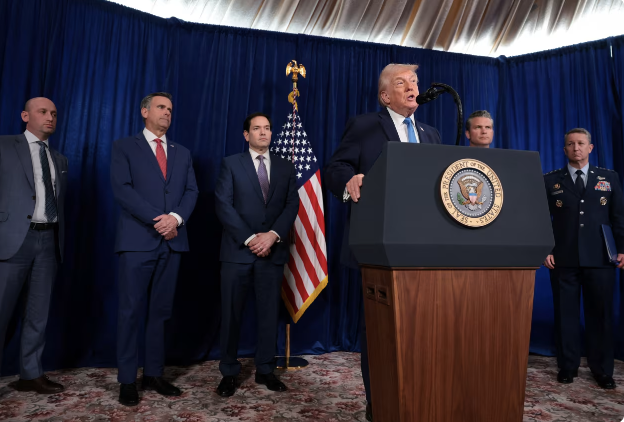
The President described the overnight operation as a "spectacular" display of power, but emphasized that the mission's next phase is governance. With the Maduro regime dismantled, Washington is now moving to fill the power vacuum with American oversight and corporate expertise.
1. "A Safe and Judicious Transition"
Addressing a room of reporters alongside his top Cabinet officials, President Trump clarified that the U.S. presence in Caracas is not merely a military occupation but a temporary governing mandate.
"We’re going to run the country until such time as we can do a safe, proper, and judicious transition," Trump said. The President argued that leaving Venezuela immediately would risk letting another hostile actor seize power. To prevent this, he has designated several high-ranking Cabinet officials to oversee the nation's "conversion" toward a new system, though he stopped short of endorsing the previous opposition leaders.
2. Designated Oversight: The Cabinet's New Role
Unlike previous regime-change efforts, the Trump administration appears to be implementing a direct oversight model. The President noted that the officials standing with him—including War Secretary Pete Hegseth, Secretary of State Marco Rubio, and CIA Director John Ratcliffe—would be instrumental in this new administrative phase.
"We’re designating people," Trump remarked, suggesting that U.S. expertise will be deployed to stabilize the Venezuelan economy and reorganize its government institutions. This "hands-on" approach is designed to ensure that the transition aligns with American national security interests and regional stability.
3. Rebuilding the Infrastructure: The Oil Mandate
A central pillar of the U.S. administrative plan is the revitalization of Venezuela’s oil industry, which holds the world’s largest proven reserves. President Trump made it clear that "strong involvement" in the energy sector is non-negotiable.
"We’re going to have our very large United States oil companies go in, spend billions of dollars, fix the badly broken infrastructure, and start making money for the country," Trump stated. Under the U.S. administration, these companies are expected to bypass years of neglect and sanctions-induced decay, turning the oil industry into the primary engine for the country’s recovery—and a means to reimburse the U.S. for the costs of the intervention.
4. "Lights Out" in Caracas: The Tactical Success
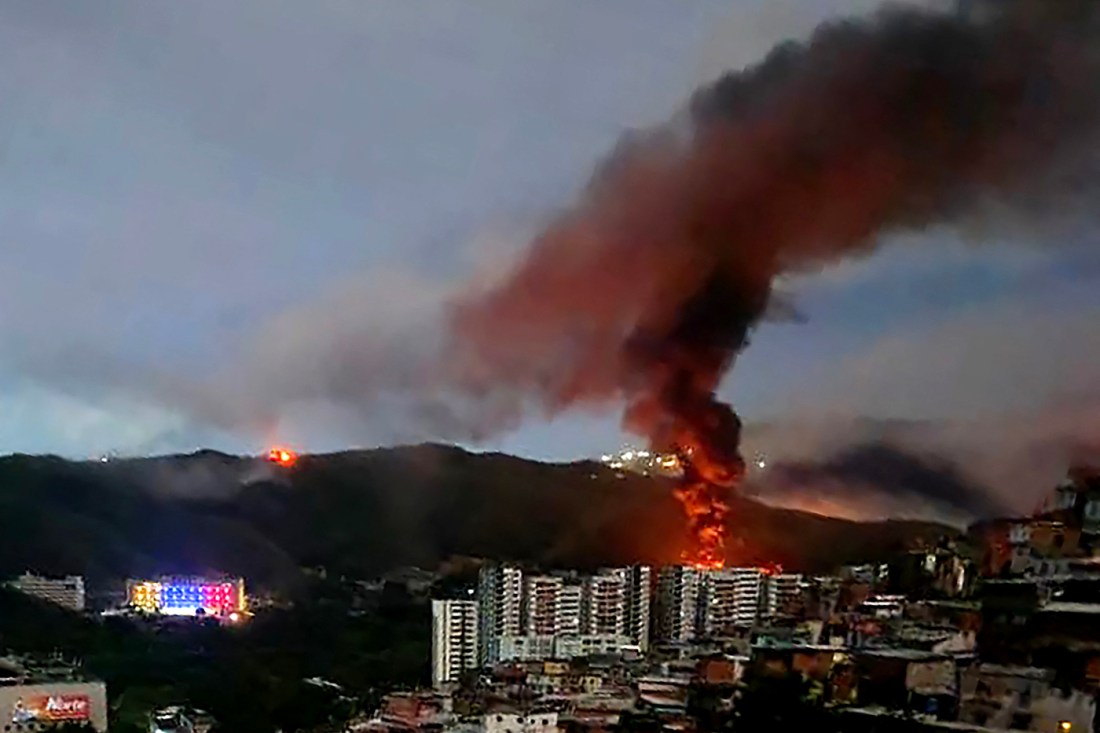
The President also provided new details on the precision of the strike that led to this administrative takeover. He noted that the operation was so sophisticated that "the lights of Caracas were largely turned off" due to American cyber and electronic warfare expertise, allowing special operators to move in total darkness.
"No nation in the world could achieve what America achieved yesterday," Trump boasted. He warned that while the U.S. aims for a peaceful transition, the military remains ready to stage a "second and much larger attack" if any loyalist forces attempt to interfere with the new American-led administration.
Analysis: A New Era of Intervention
By declaring that the U.S. will "run" Venezuela, the Trump administration has embarked on a bold and controversial experiment in nation-building. For the Venezuelan people, it offers a promise of stability and an end to hyperinflation, but for the international community, it raises fundamental questions about sovereignty and the future of the Monroe Doctrine in the 21st century.
Trending Keywords: Trump Venezuela takeover, US administration of Caracas, Venezuela oil industry rebuilding, Maduro capture trial, Trump Mar-a-Lago press conference.
This report is an independent analysis of the President’s January 2026 declarations regarding the administrative future of Venezuela. Follow our blog for the latest on the Caracas transition.